

The rise of becoming brands
The experience economy asked brands to orchestrate moments that matter. Companies built richly conceived brand worlds. Products became props. Spaces became stages. The goal? Turn experience into memory—and objects into markers of meanings earned.
But the experience economy’s successor, the transformation economy, raises the stakes. It asks not what someone experiences, but who they become because of it.
In this new competitive landscape, consumers increasingly buy not only to experience meaning, but to experience change. They aren’t just looking for brands that reflect who they are. They’re looking for brands to help them become the next best version of themselves.
And in that world, a brand’s job is no longer to stage a story around the customer.
It’s to set the plot in motion.
Jewelry: From keepsake to catalyst
You can see this shift across lifestyle categories, but it’s unusually clear in jewelry’s middle market. For decades, baubles have been the archetypal commemorative product: the ring after the proposal, the necklace after the anniversary, the watch after the promotion. The object arrives after its meaning—an ornate period marking the end of a happy story.
But look today, and you’ll find a category quietly split in two. Many legacy brands still operate under commemorative logic, which makes the product an artifact of other, memorable experiences. Here, jewelry confirms who I already am.
But a growing set of new entrants are doing it differently. Companies like Mejuri and Brilliant Earth frame purchase less as commemoration and more as self-investment, whether in daily rituals or long-term earth friendliness. Vrai turns selecting a diamond an act of extreme personalization and ethical self-alignment. Catbird turns bracelets into welded rituals.
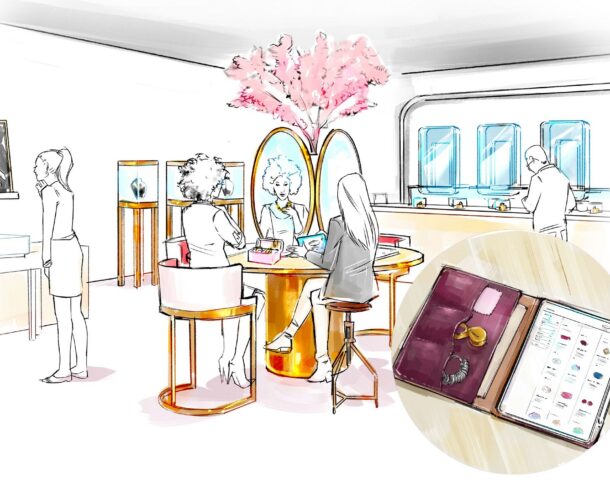
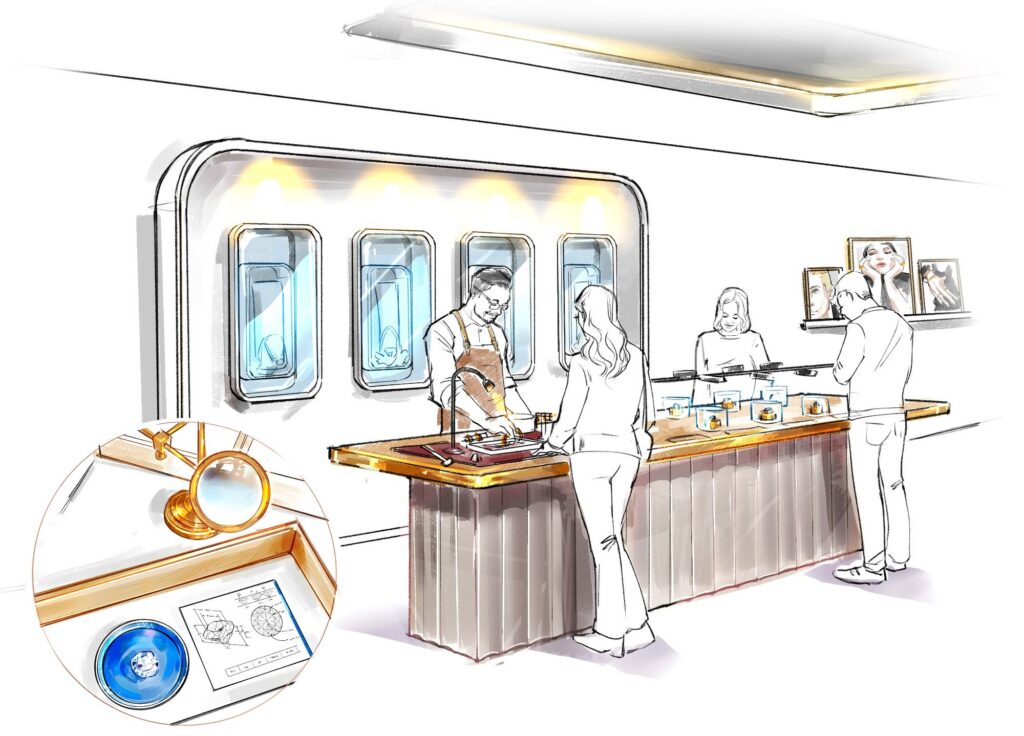
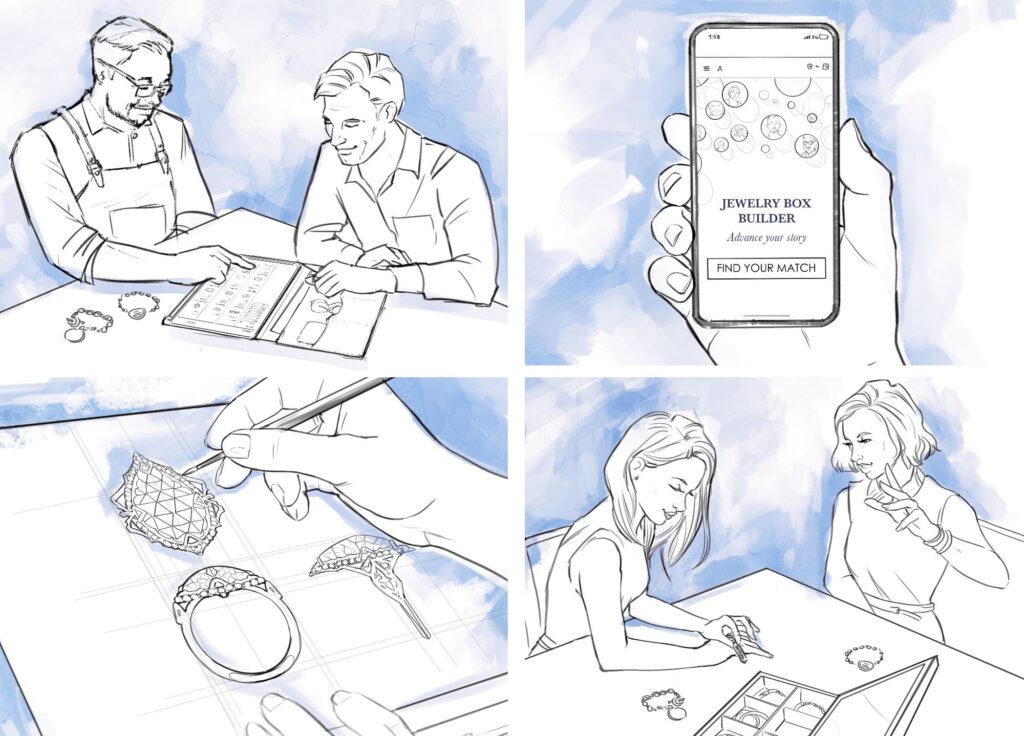
Meanwhile, legacy jewelers with strong commemorative credentials are evolving to meet this moment on their own terms. Helzberg—which recently dropped the “Diamonds” from its name as part of a broader modernization—has introduced a new store concept that shifts the purchase experience from a pleasant transaction to a discovery arc. In its “1915” format, craftmanship bars, customization rituals, and visible jeweler workshops turn the journey toward a milestone purchase into a sequence of small transformations. Moments of exploration, personalization, and authorship don’t just tell the brand’s story—they advance the customer’s. That’s not mere brand storytelling. That’s brand as story-making.
In the old model, the product followed the story. In the new one, the product helps produce it. Jewelry stops behaving like an artifact of identity and begins acting as a catalyst for it.
And that’s the harbinger of transformation economy logic. For decades, most players in this category operated as badge brands. They offered products as markers—signals of stages, status, and yes, love achieved.
Becoming brands offer something different. They treat customers not as fixed personas but as trajectories, and their products are designed not to reflect change, but to accelerate it.
The role of brand changes accordingly. Rich brand storytelling isn’t gone—far from it. But brand-led worldmaking and storytelling does shift from the main event to supporting infrastructure: a service capability rather than the brand’s central promise. The work of brand becomes something both more intimate and more generative: designing the rituals, services, and interactions that help customers begin shaping who they might become.
Badge brands signal the past. Becoming brands shape what comes next.
The false choice between Gen Z and everyone else
Do you hear your Board getting nervous? If the future of the category belongs to transformation language—self-investment, reinvention, becoming—doesn’t that risk alienating the mature customers who still butter our revenue bread?
It’s a worry that sounds highly responsible. It’s also a red herring. Because the shift isn’t demographic; it’s developmental.
Boomers don’t see themselves as static custodians of tradition any more than Gen Z sees itself as permanently unfinished. Both cohorts use consumption to move through identities. The difference lies in the projects they pursue.
In jewelry, older consumers often approach buying as mastery and refinement—expanding a collection, doubling down on signature elements, strengthening a legacy in formation. Younger buyers are more likely to approach it as exploration—testing tastes, experimenting with diverse personal aesthetics, playing with how a piece lives in their daily life. But in both cases, the act of choosing does more than signal who you are. It moves you forward.
Nietzsche famously urged his readers to “become who you are.” Today’s consumers are doing exactly that—and increasingly, they’re doing it with brands as their unlikely collaborators.
Which means customer personas aren’t obsolete. But they do need to be treated as snapshots along an infinite arc of becoming, moving targets as customers pass through cycles of curiosity, experimentation, consolidation, and reinvention. The real design challenge for brands is not to mirror back those snapshots, but to create the experiences through which the arc itself unfolds.
Service design: the conditions for becoming
This is where the transformation economy flips one of retail’s oldest assumptions. In a commemorative model, service design matches people with products that fit who they already are. The work of service is needs alignment—with a smile. It’s an experience, no doubt, and if it’s on-brand it will also be pleasant, memorable, even differentiated. But nothing requires it to change the customer.
For a becoming brand, the objective of service design is different. Services must stage a sequence of micro-experiences that move the customer along a trajectory—not the company’s purchasing journey, but the customer’s developmental one.
All the same standards of hospitality and engagement apply. But they’re no longer the end goal. They’re conditions that allow something more consequential to happen.
Let’s return to jewelry, where materials alone rarely explain the differences among brands. Here, customer perceived value (CPV) must be designed into the service interaction. A becoming brand in this category will use service design to stage several forms of becoming—different ways the customer can grow through the interaction.
Learning occurs as expert guidance reveals craft, materiality, and heritage making: the origin of a stone, the hand of the artisan, the technique behind the setting. The customer becomes more knowledgeable about what they’re choosing and connects it to other aspects of their world.
Experimenting emerges when the format invites exploration, even play—trying pieces, layering styles, discovering preferences. The customer begins to clarify and stretch their own taste, glimpsing and testing out possible future versions of themselves.
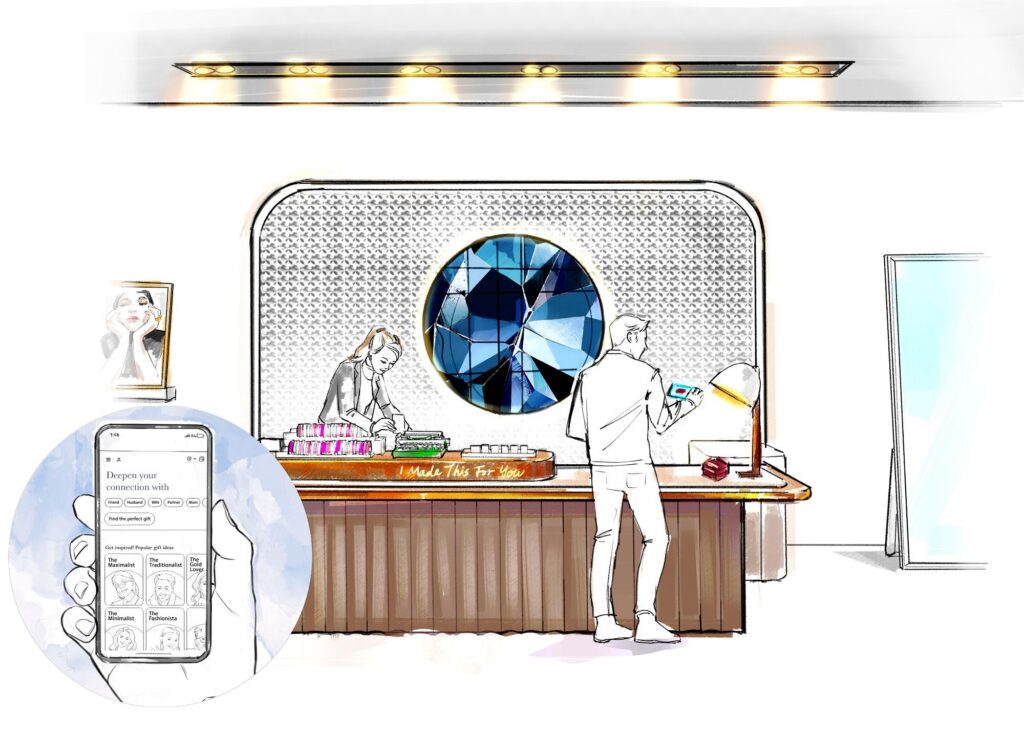
Connecting sparks as service helps customers imagine and enact the relationships the piece will deepen: how it will be given, worn, noticed, talked about. Here, expert service helps turn the object into a tool for strengthening bonds, not just marking them.
And creating unfolds when service choreography ensures the purchase is thoughtfully woven into the tapestry of something larger—a collection, a legacy, an individual or shared project that endures and accumulates meaning over time.
Metal and stone bear these perceptions, but don’t guarantee them. Each is a byproduct of the interaction between brand and buyer. And when these layers converge—through service-led education, curation, storytelling, and expertise—the purchase changes character. The object stops behaving like a commodity and begins behaving like a catalyst.
For a becoming brand, value isn’t embedded in the product at all. It’s produced through the service interaction which unlocks the product’s transformative potential for an individual customer.
Lifetime value in the transformation economy
That changes the dynamics of the customer relationship. They may have paid for the bracelet—but what they bought is the change it makes possible. And that change doesn’t remain in the product once the interaction ends. It lives in the customer, altered, carrying the seed of another, future transformation.
That’s why, in the transformation economy, value compounds differently. Each experience of becoming plants conditions for the next.
Customers learn, and knowledge deepens their appreciation of craft and quality. They experiment, refining their taste and discovering new ways a piece might live within their style. They connect, weaving objects into the rituals and relationships that shape their lives. And over time, they create—assembling collections, traditions, and legacies that extend far beyond the original purchase.
Each micro-transformation advances the customer’s trajectory. And when service design is built to facilitate those steps, the brand begins to shape that trajectory rather than simply react to it.
It’s a paradigm shift with a power to quietly rewrite the economics of the category. Jewelry brands have long been beholden to the calendar: proposals, anniversaries, holidays—the familiar cadence of milestone occasions. In that world, demand arrives on schedule and brands wait to commemorate it.
But when customers seek ongoing change, brands no longer need wait for the next calendar milestone. Through services that create the conditions for the next transformation, brands can participate in defining what it will be.
That is the lifetime value advantage that becoming brands unlock through service design.
A necklace becomes the start of a collecting practice. A ring becomes part of family lore. A bracelet becomes the first step in a relationship with craft, style, and legacy that continues to unfold through loyalty-creating service experiences.
When service design stages those transformations on purpose, the brand isn’t just present for the next chapter.
It helps write it.

March 10, 2026 By Rie Bridges
Related articles
Brand scenario planning: How to ensure relevance across uncertain futures