

The future of retail is a playground
On a recent work trip, in my spare time before a delayed flight, I bolted over to a place where you can pet a stingray, design your dream car, and maybe even get over your fear of roller coasters. No, not Disney. It was Mall of America, the western hemisphere’s largest retail playground.
What surprised me most wasn’t the sheer size of the space (5.6 million square feet) or the zooming coasters overhead. It was how clearly the whole experience taps into something called the transformation economy, the stage after the experience economy—where the goal isn’t just to entertain you, but to help you become something new.
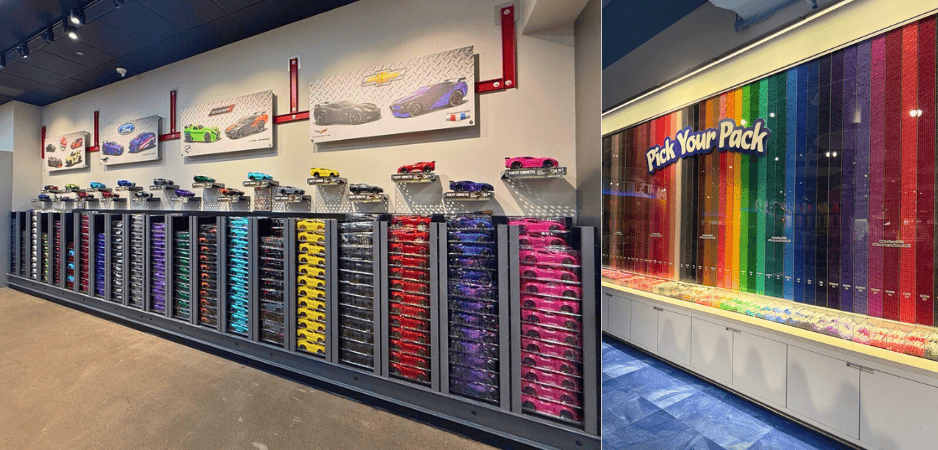
What sets Mall of America apart is its commitment to customization. Retail is no longer just about what you can buy, it’s about what you can make. At the LEGO Store, you don’t just buy something—you make a tiny version of yourself. At Build Your Ride, I pieced together a miniature Hellcat, wishing it could actually roll out of the mall parking lot. And over at Crayola? They handed me the power to pick my own crayon color palette. Goodbye random leftover colors—hello a pack that actually feels like my personality (hint: it’s Ultraviolet everything). These moments feel less like transactions and more like small identity boosts.
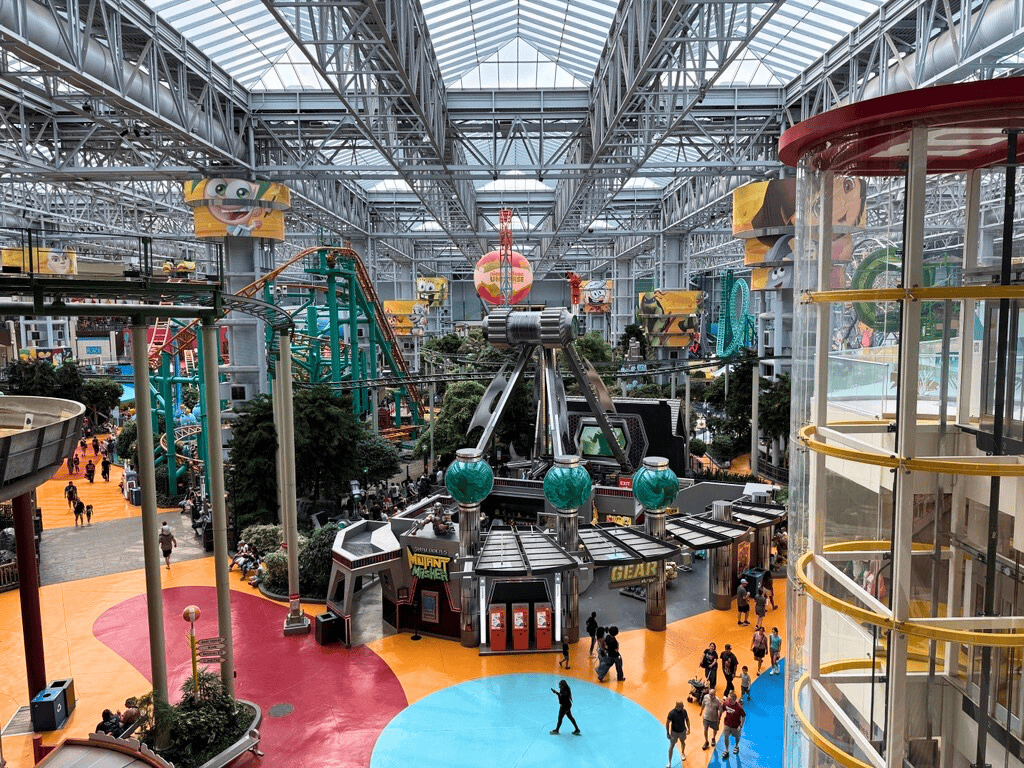
Then there’s the sense of wonder—the chance to rediscover play. Nickelodeon Universe sits at the center like a technicolor heartbeat. I rode the Fairly Odd Coaster and instantly reverted from “professional adult on a work trip” back to the kid who lived for Saturday morning cartoons. The attractions stretch well beyond roller coasters. There are rock-climbing walls with themed panels of piano keys and lighthouses. And then there’s the Human Crane, where you become the claw dangling over a pit of prizes. I’ve seen this concept at branded pop-ups and activations. It’s childhood fantasy fully realized, and apparently still thrilling when you’re old enough to have back pain.
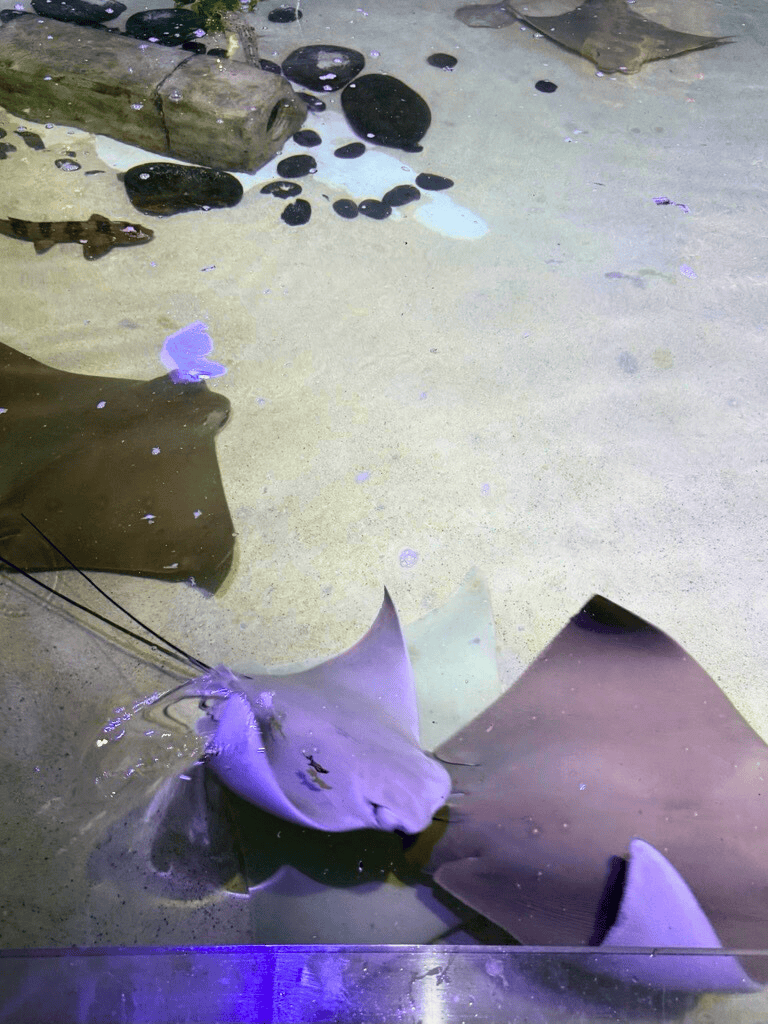
That same spirit continues through the Sea Life Aquarium, where a 300-foot tunnel carries you below species from around the world. Stingrays glide past your fingertips in the touch tank, and for a second, I felt like Steve Irwin. Everywhere you turn, it’s equal parts play and spectacle, a reminder that wonder is essentially engineered into the architecture. I caught myself slowing down, breathing deeper, and just… staring. It didn’t change what I was doing—it changed how I was feeling.
Part of the magic comes from the ability to blend the local and the global. You can ride through a cartoon barnyard one minute and step into a rainforest aquarium the next. International food sits alongside American classics. It’s like someone handed a kid a globe and said, “Sure, put everything in one place.” The result is a cultural mash-up familiar enough to ground you, but surprising enough to keep you exploring.
Of course, no place is perfect. The escalator positioning feels like a puzzle designed by someone with a mischievous streak—you’ll get there eventually, but not without a detour. The “accidental” paths are engineered for discovery and I fell for it every time.
Then there are the small but telling observations. In most malls, people are weighed down with shopping bags, practically advertising their purchases as they shuffle from store to store. Here, I noticed the opposite, people strolling hands-free, even in the middle of all this temptation. Maybe it’s because of the locker feature: for $15, I was able to stash my luggage for the whole day and roam unencumbered. It made me wonder—if you give customers space and freedom at an affordable rate, will they buy more goods? Or does the abundance of experiences shift the purpose of the trip altogether? Maybe people come here less for a new pair of jeans and more for a roller coaster ride, a stingray touch, or the bragging rights of becoming the human claw.
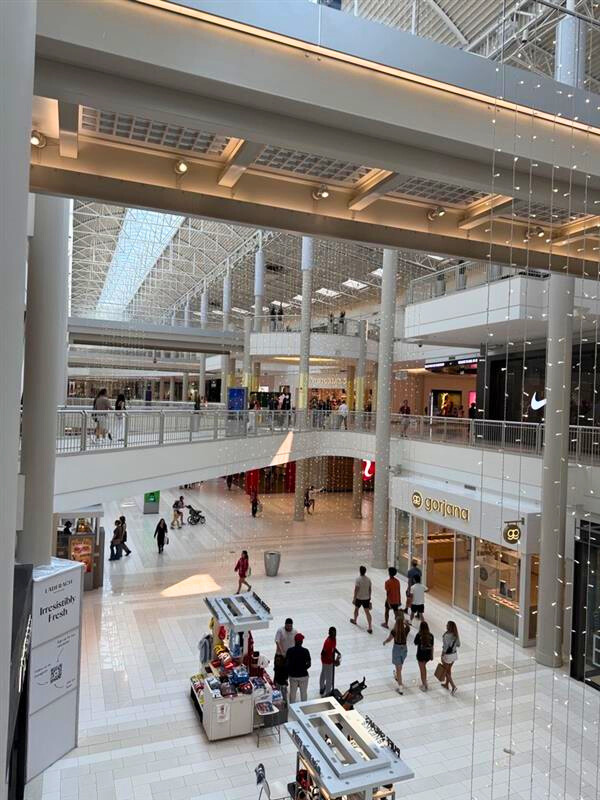
What struck me most was how carefully the mall choreographs your senses. Towering LEGO statues loom above the concourse, and natural light floods the amusement park—bringing with it trapped heat we all know too well. Guests aren’t just looking; they’re petting marine life, hearing screams from roller coasters, and smelling iconic scentswafting from the stores. One whiff of Auntie Anne’s pretzels from two floors away, and I swear I was hypnotized into buying one. The mall knows exactly what it’s doing. It gently nudges you from “observer” to “participant.” That’s the power here: you’re not just browsing; you’re doing, thinking, and feeling.
Mall of America isn’t just a mall.
It’s a blueprint for how physical spaces can stay relevant in the age of online everything: immersive, customizable, multi-sensory destinations where people don’t just shop—they connect.
For retailers, it’s proof that if people can buy anything online in under five minutes, the new competitive advantage is the experience itself. For workplaces, it shows how environments that lean into play can unlock deeper engagement. For cities and cultural spaces, it highlights the power of combining the familiar with the unexpected. Mall of America isn’t selling toys or food or roller-coaster rides; it’s selling immersion—helping people leave feeling even a little different than when they walked in. A little more you, leveled up.
Alexandria Casella is a Designer on Monigle’s Experience Design team.

December 8, 2025 By Alexandria Casella
Related articles


More Chief than Marketing: What’s actually happening to today’s CMOs